


















AppBanana
What is AppBanana?
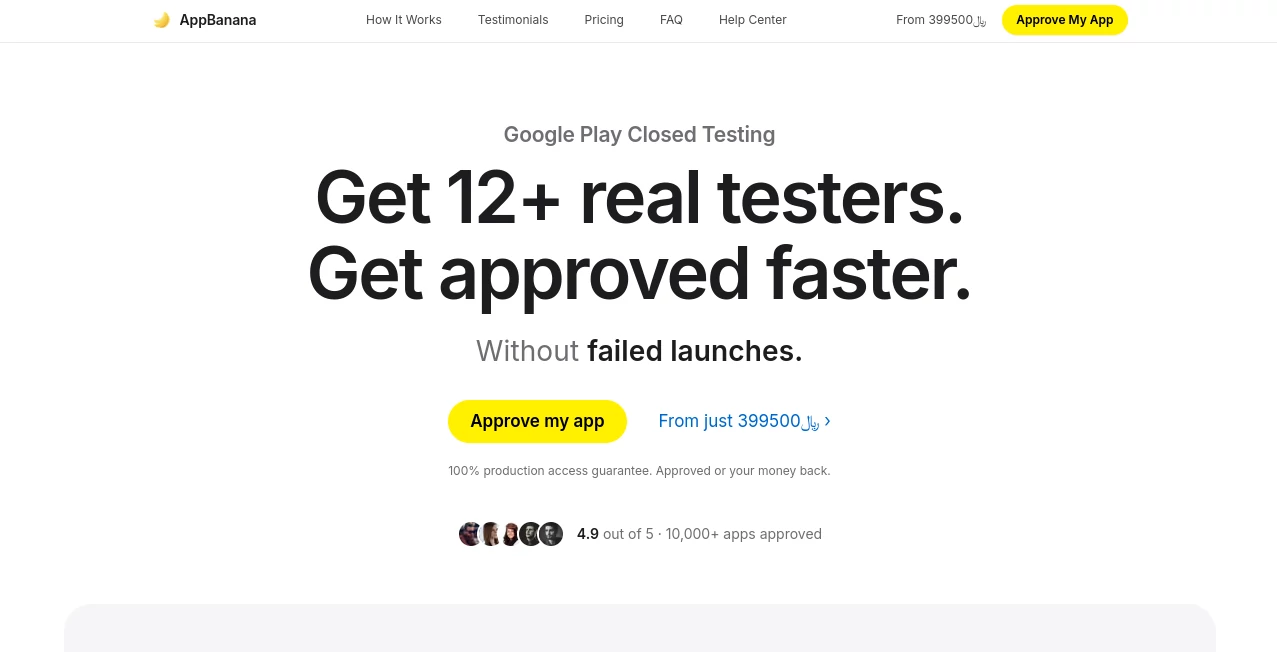
Getting an Android app through Google Play's closed testing stage can be surprisingly time-consuming, especially for developers who do not already have a reliable group of testers. AppBanana is built to solve that specific problem by connecting developers with real Android users who test their applications during the required closed testing period.
The service focuses on helping developers complete the testing requirement with real people rather than bots or emulator accounts. According to the official website, more than 10,000 apps have been approved through its service, while more than 1,500 apps are currently in testing. The company also says testers can be onboarded in under an hour, which can remove one of the biggest delays in the publishing process.
For an indie developer preparing a first Android release, this can be particularly useful. Instead of spending days asking friends, communities, or existing users to join a test, the testing process can be organized through a dedicated service.
Key Features
- Real Android testers using physical devices rather than emulators.
- Support for 12 to 25 testers depending on the selected plan.
- Active testing periods lasting 14 days, with an extended 21-day option on the premium plan.
- Tester onboarding designed to begin within approximately one hour.
- Guidance for answering the Google Play production questionnaire.
- Free retesting when additional testing is required after rejection.
- Detailed feedback and reporting on higher-tier plans.
- Human support through WhatsApp.
User Interface
The service is designed around a relatively straightforward workflow rather than a complicated collection of developer tools. Developers submit their app information, provide the required testing details, and allow the team to coordinate the testers.
The website also presents a tester management experience that lets developers understand the progress of a testing cycle. This approach is useful for people who would rather spend their time improving the application than manually coordinating a large group of testers.
Accuracy & Performance
For a testing service like this, performance is less about generating an answer instantly and more about whether testers actually interact with an application consistently. The service states that verified Android users install and interact with apps on physical devices and remain active throughout the testing period.
The company reports a 99.9% first-attempt approval rate for apps using its service. That figure is a company-reported claim rather than an independently verified industry statistic, so developers should still make sure their application itself complies with Google's policies and quality requirements.
The practical advantage is the structured testing cycle. Instead of collecting installations and hoping testers remain active, the service coordinates participation throughout the required period.
Capabilities
The core capability is recruiting and coordinating real human testers for Google Play closed testing. Developers can choose packages with different tester counts and testing durations, while the higher plans add features such as detailed feedback, bug tracking, UX reporting, and a strategy call.
The service also provides guidance for the production access questionnaire. This can be valuable for developers who understand coding and app development but are less familiar with the administrative side of Google Play publishing.
Another useful capability is retesting. If Google requires another testing cycle, the company states that it can deploy a new group of testers and repeat the process without charging an additional testing fee.
Security & Privacy
The service states that it collects only the information needed to provide its testing service and communicate with customers. This can include contact details, WhatsApp information, Google Play Console developer information, app details, package IDs, testing links, and instructions supplied by the developer.
Developers should still review the privacy policy before sharing sensitive project information. The published policy explains that the current service relies primarily on manual communication through WhatsApp and that its privacy practices are designed around the information required to fulfill testing orders.
Use Cases
The service is particularly relevant to independent Android developers preparing their first release. A solo developer may have a finished application but lack enough people with Android devices to complete a meaningful closed test.
It can also be useful for small development teams launching MVPs. Rather than asking employees or friends to repeatedly install and interact with an application, the team can outsource tester recruitment and coordination.
Another practical scenario is a developer who has already experienced a Google Play rejection. Starting another testing cycle manually can add weeks to a launch schedule. Having organized testers available can make the process easier to restart.
For example, imagine a developer has completed a finance application and needs a group of active Android testers before requesting production access. Instead of posting recruitment messages in several communities and tracking participation in spreadsheets, the developer can submit the application details and let the testing team coordinate the participants.
Pros and Cons
Pros
- Real human Android testers instead of bots or emulators.
- Fast tester onboarding.
- Structured 14-day testing cycles.
- Free retesting is included in the service offering.
- Guidance for the Google Play production questionnaire.
- Different plans for different tester requirements.
- Human support is available through WhatsApp.
Cons
- The service is specifically focused on Google Play closed testing rather than general-purpose app testing.
- It is a paid service, so developers with an existing tester community may prefer to manage testing themselves.
- Production approval ultimately depends on Google Play and the quality and policy compliance of the application.
- The reported approval statistics are provided by the company and should not be treated as an independent guarantee of Google's decision.
Pricing Plans
The pricing structure uses one-time payments rather than recurring subscriptions. The Basic plan provides 15 real Android testers for a 14-day testing period. The Standard plan increases the tester count to 20 and adds features such as a detailed feedback report and free retesting.
The Premium plan is designed for larger or more serious launches and includes 25 testers, a 21-day testing window, priority handling, a one-on-one strategy call, and bug tracking and UX reporting.
- Basic: $10 one-time payment for 15 testers and 14 days of testing.
- Standard: $20 one-time payment for 20 testers and 14 days of testing.
- Premium: $50 one-time payment for 25 testers and a 21-day testing window.
Prices and promotional discounts can change, so developers should check the current pricing before ordering.
How to Use the Service
- Submit your Google Play app link and the information required for testing.
- Provide the necessary closed testing details and instructions.
- Allow the team to match your application with verified Android testers.
- Let the testers install, open, and interact with the application during the testing period.
- Use the supplied guidance when completing the Google Play production questionnaire.
- After the required testing period, proceed with the production access request.
- If another testing cycle is required, use the available retesting option.
Comparison with Similar Tools
Traditional tester recruitment and dedicated testing services solve different problems. Recruiting testers yourself can cost little money, but it often requires considerable coordination. You need to find suitable Android users, send invitations, monitor participation, remind people to stay active, and replace testers who stop participating.
General app-testing platforms can provide broader usability feedback, bug reports, or user research. This service takes a narrower approach: its main purpose is helping Android developers organize the closed testing stage required for Google Play production access.
That makes it more suitable for a developer who already has an application ready for publishing and primarily needs reliable human participation during the closed testing process.
Conclusion
For Android developers who find Google Play's closed testing requirement difficult to organize, this service offers a practical alternative to recruiting and managing testers independently. Its strongest point is the focus on real Android users, structured testing periods, and assistance with the production access process.
The combination of tester coordination, human support, questionnaire guidance, and free retesting makes it especially appealing to indie developers and small teams working against a launch deadline. It does not replace the need for a high-quality, policy-compliant application, but it can remove much of the logistical work involved in arranging a closed test.
If your main obstacle is finding enough active Android testers and keeping the testing cycle organized, this is a focused service worth considering.
Frequently Asked Questions (FAQ)
How many testers can I get?
The available plans provide between 15 and 25 real Android testers. The exact number depends on the plan selected.
How long does the testing period last?
The standard testing period is 14 days. The Premium plan extends the testing window to 21 days.
Are the testers real people?
Yes. The service states that its testers are real Android users who use physical devices rather than emulator or bot accounts.
How quickly can testing begin?
The company states that testers can be onboarded within one hour after the required information has been submitted.
What happens if Google asks for another testing cycle?
The service states that it provides free retesting when Google requires another cycle. A new group of testers can be deployed for another testing period.
Does the service guarantee Google Play approval?
The website advertises a money-back approval guarantee, while its terms clarify that the service guarantees fulfillment of the tester requirement rather than Google's independent decision. Developers should therefore continue to meet all applicable Google Play policies and quality requirements.
Is there a monthly subscription?
No. The published plans use one-time payments rather than recurring subscriptions.
Who is this service best for?
It is particularly useful for indie developers, startups, and small Android teams that need a reliable way to organize closed testing before requesting Google Play production access.
These classifications represent its core capabilities and areas of application. For related tools, explore the linked categories above.

AppBanana Alternatives Product

UpMocker

Mythx AI

KaneAI

AIQualityHQ

CodeProt

Project Mela

cznull

Ito AI